Basketball drills: five that hold up any session
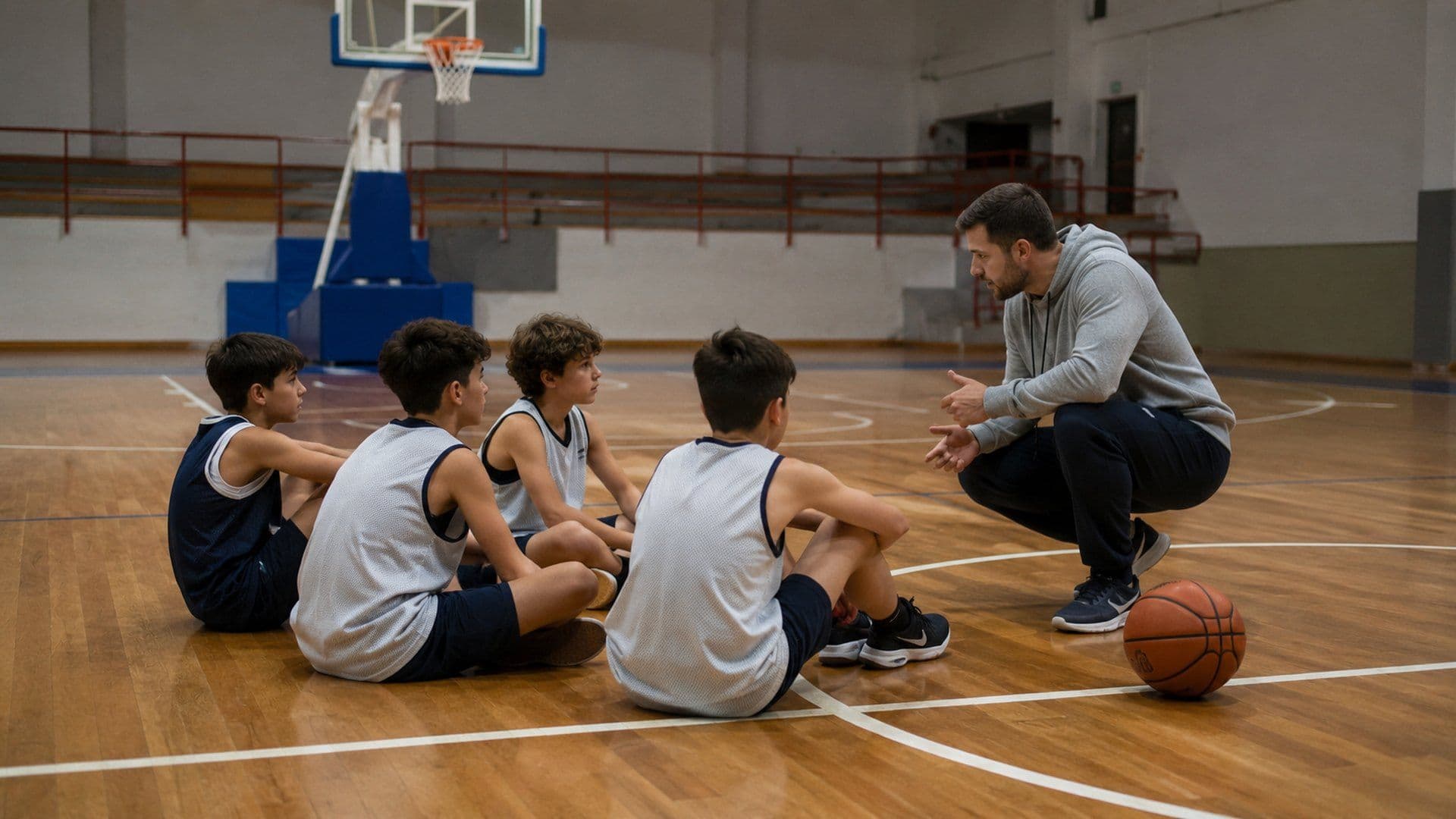
Most drills fail for a reason that has nothing to do with the drill. Nobody in the hall — the coach included — has decided what doing it properly actually looks like.
Most drills fail for a reason that has nothing to do with the drill.
The organisation is fine, the players are working, the ball is moving. And yet nothing carries over into Saturday, because nobody in the hall — you included — has decided what doing it properly actually looks like. A drill without an execution criterion is just organised movement.
What turns an activity into a drill
One sentence, said before the first repetition, that any player could use to judge their own rep without looking at you. Not "work hard". Not "good spacing". Something a fourteen-year-old can answer yes or no to: did my first dribble cross the defender's front foot, or did it go sideways?
Write that sentence before you write the drill. If you cannot, the drill is not ready, and no amount of intensity will rescue it.
You are not coaching the drill. You are coaching the one thing the drill was built to expose.
⚠️ This is not an argument for saying less. It is an argument for saying the same thing twelve times instead of twelve different things once each.
Five that hold up any session
| Drill | How it runs | The execution criterion |
|---|---|---|
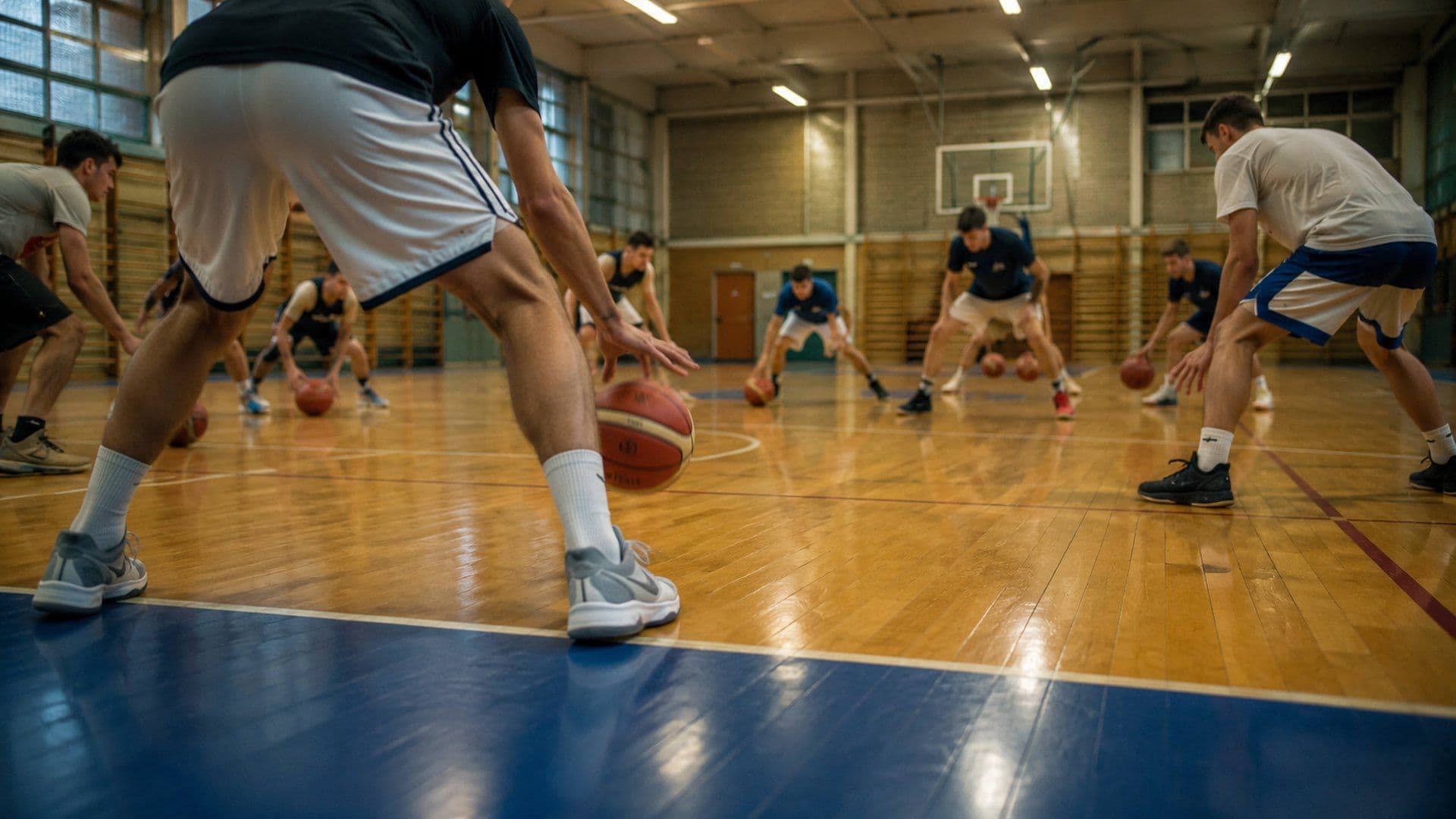
| Two-ball handling | Thirty seconds on the spot, two balls, alternating and then together; you hold up a number of fingers at random | They call the number out. Eyes down means the rep did not count |
| 1v1 live off a pass | Attacker receives on the wing, defender closes out, two dribbles maximum | The first dribble crosses the defender's front foot. Sideways is a failed rep, even if the shot goes in |
| 3v2 continuous | Three attack, two defend, the scorer's team stays on; rebounders break out immediately | The decision is made before the free-throw line, not under the basket |
| 4v4 shell, no dribble | Attack passes only, defence in help position; four minutes, then swap | Every defender's feet move while the ball is in the air, not after it arrives |
| Close-out and contest | Coach passes to a shooter, defender sprints from the restricted area, live afterwards | Last two steps short and choppy, hand up without leaving the floor |
🔑 If you can only keep one, keep 1v1 live off a pass. It is the only one on the list where a player cannot hide behind the group, and the criterion is visible from anywhere in the hall — you do not need to be standing in the right place to judge it.
How long a block should last
| Age group | Block length | What to prioritise |
|---|---|---|
| U12 | 6–8 minutes | Ball handling and 1v1. Everything with a ball in hand; no queue longer than three |
| U14 | 8–10 minutes | 1v1 and 3v2. First season where a criterion can be enforced rather than suggested |
| U16 | 10–12 minutes | Shell defence and close-outs. Contact is legal and should be present |
| U18 | 12–15 minutes | Same drills at match tempo, with a shot clock running and a scoreline that matters |
Those minutes are what I would set, not a rule. The number that actually matters is the one underneath: a U12 block that runs past eight minutes stops teaching and starts filling time, and a U18 block that stops at six never reaches the fatigue where habits are made.
Three mistakes that survive every season
- The queue — six players, one ball, one basket. Whatever the drill was meant to teach, what it actually teaches is waiting. Split the hall before you shorten the drill.
- Correcting everything — a player who has been told four things has been told nothing. Pick the criterion and let the rest go until next week; it will still be there.
- Attack against nobody — the drill that looks best is usually the one with no defender in it. Add a defender at half speed rather than removing the opposition altogether.
The third is the one nobody fixes, because unopposed drills photograph well and opposed ones look untidy. A messy 3v2 teaches more than an immaculate lay-up line.
The five minutes before they arrive
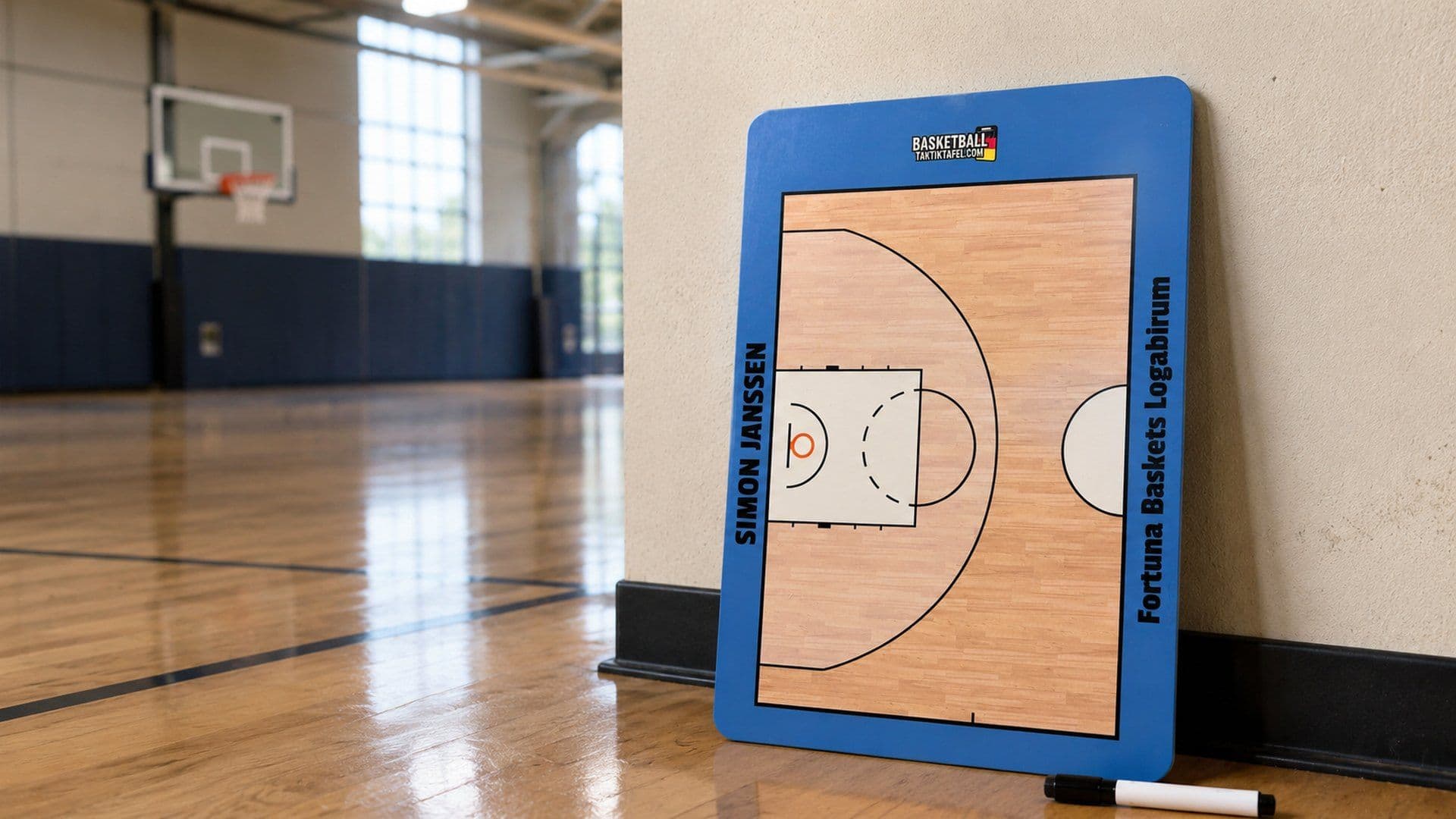
Practise this and the session organises itself: draw the block on your coaching board before anyone walks in — the shape of the drill, the two groups, and the criterion written in words underneath it. Prop it against the bench where players pass on the way in.
Then, when the drill breaks — and the 4v4 shell always breaks in the same place, the weak-side help — you do not explain it again from the beginning. You wipe one line, redraw where those feet should have gone, and the group is back in under fifteen seconds. Liquid-ink boards are made for exactly this: draw it, wipe it, draw it again, forty times in a season.
Two things sit either side of this article. The ten minutes before the first block belong to the warm-up games that actually warm a team up, and the reason a drill is on your list at all comes from the tactical principles that decide matches.
Design your own coaching board
Over 10,000 coaches have already created theirs.
You might also like
Liked this article?
Design your fully personalised coaching board with your name, club colours and team identity.
Design now →