How to use a coaching board well (and when to put it down)
There is a coaching board in nearly every kitbag in the country and most of them come out twice a season. The problem is almost never the board. It is what gets drawn on it, and when.
There is a coaching board in nearly every kitbag in the country, and most of them come out twice a season.
Usually in a bad time-out, usually held at chest height in front of nine players of whom four can see it. You draw, you ask "everyone happy?", everyone nods, nobody is happy. The problem is almost never the board. It is what gets drawn on it, and the moment you decided to draw.
Four moments it earns its place
| Moment | How long | What goes on it |
|---|---|---|
| Before they arrive | 3 minutes | The evening's running order, with the minutes beside each block. Stood where they walk in |
| Mid-block repair | 15 seconds | One line. The single thing that broke, redrawn — never the whole drill again |
| The time-out | Under 30 seconds of the minute | One adjustment, or one play. Not both |
| After the final whistle | 2 minutes | The possession that decided it, drawn once, while it is still in their legs |
🔑 The fourth is the one that changes a season. Drawing the decisive possession in the changing room, before the phones come out, does more for a squad's reading of the game than the next three training sessions combined — and it takes two minutes.
How to spend a one-minute time-out
You have sixty seconds and you will feel like you have fifteen. Here is the split I would use, and it is a recommendation rather than a rule:
- The first ten seconds, say nothing. Let them sit, drink, and let their heart rate come off the ceiling. Nothing said into a hundred and ninety beats per minute is retained.
- The next thirty, one thing. One adjustment or one play. If you are choosing between two, the squad has already told you which by whatever just went wrong twice.
- The last twenty, no board at all. Put it face down and look at them. Names, eyes, and the sentence you want ringing in their ears as they stand up.
The board is there to remove words, not to add them. The moment it is generating more talking than it saves, put it down.
Three marks, not a diagram
The instinct is to draw everything: five circles, five crosses, every pass, every cut. What arrives is nothing, because a player under fatigue reads a crowded drawing the way you read a train timetable at speed.
Three marks. Where the ball starts, where the gap has to be, where the shot comes from. Everything else they already know, and if they do not, a time-out is not where they will learn it. This is also why the most useful thing to draw is often empty floor rather than players — a habit worth stealing from the four foundations that decide matches.
⚠️ Drawing less is not the same as saying less. You still explain. You just stop asking the drawing to carry the explanation.
When to put it down
There are three moments when reaching for it makes things worse, and every coach has committed all three:
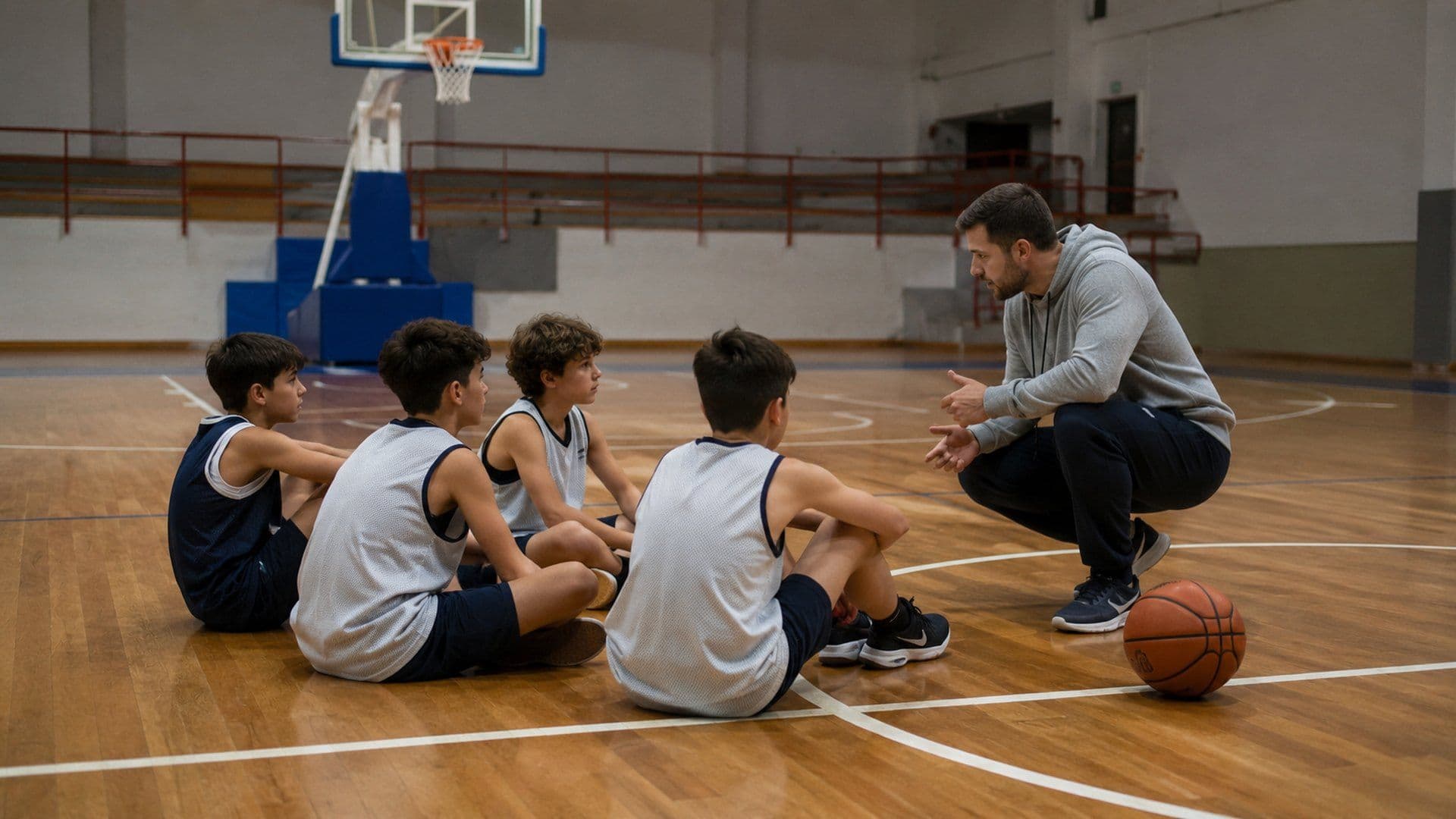
During a warm-up, because those ten minutes belong to the games themselves and to you watching ankles. Immediately after a heavy defeat, when nothing goes in and the drawing becomes a lecture nobody consented to. And with U12s in a live game, where the board should carry a name and a position and nothing else — at that age the useful instruction is "you take number seven", not a diagram.
Hand it over
The single change that improves a coaching board's value most is giving it to a player. Draw the possession, hand it to whoever has the hardest job on it — the thrower on a baseline throw-in, the ball-handler against a press — and ask them to trace their own route with a finger before giving it back.
Ten seconds, and you find out immediately whether it landed. Then wipe it and draw the counter, because whatever you called in the first quarter will be jumped by the fourth. That is the real test of a board, and the reason people search for a tactics board and end up wanting a proper one: it has to take forty drawings in a single match, wipe clean each time with liquid ink, and still show a clear line in the last minute.
Make it yours
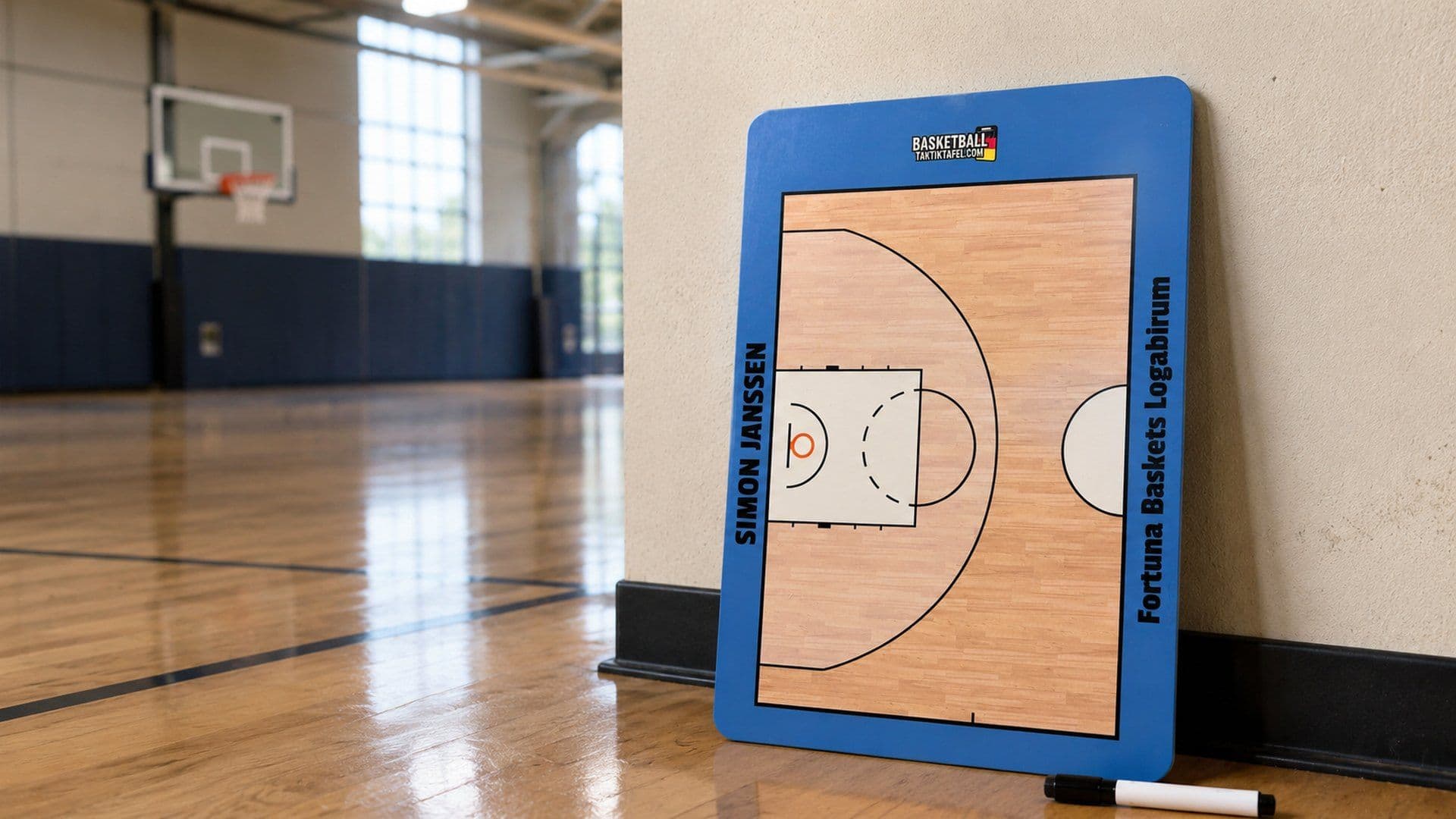
One practical detail. On a shared bench, in a shared sports hall, a board with your club crest and your colours on it does not get picked up by the opposition coach at half-time, and the half-court face on one side with the full court on the other means you are not redrawing the lines yourself in the middle of a time-out. Small things, and they are the ones you notice in February rather than September. The rest of it — the running order, the three marks, the twenty seconds with no board at all — costs nothing and works on whatever you already own. Start there. Then make one that fits how you actually coach, and how your session already runs from the first block onwards.
Design your own coaching board
Over 10,000 coaches have already created theirs.
You might also like
Liked this article?
Design your fully personalised coaching board with your name, club colours and team identity.
Design now →